
If you've ever stood in your backyard in August, hose in hand, staring at a patch of brown grass that was green last week, you already understand the core problem.
Dallas does not just challenge natural grass. It systematically humiliates it.
Most lawn care advice online is written for some mythical average climate: temperate, forgiving, with reasonable summers. That is not North Texas.
Dallas has clay soil that swells and contracts like it's breathing, summers that make Phoenix feel modest, and weather patterns that swing from standing water to cracked earth sometimes within the same week.
The grass did not fail.
The environment simply was not designed for it.
Which is why homeowners across Dallas, Plano, Frisco, McKinney, Prosper, Southlake, Flower Mound, Highland Park, University Park, and Lakewood are increasingly turning to artificial grass installation asking a question that would have sounded strange ten years ago:
Does natural grass even make sense here anymore?
That is the real conversation now. Not whether artificial grass is "popular." Not whether it is "trendy." But whether natural grass is still the smartest long-term solution for the way people actually live in Texas.
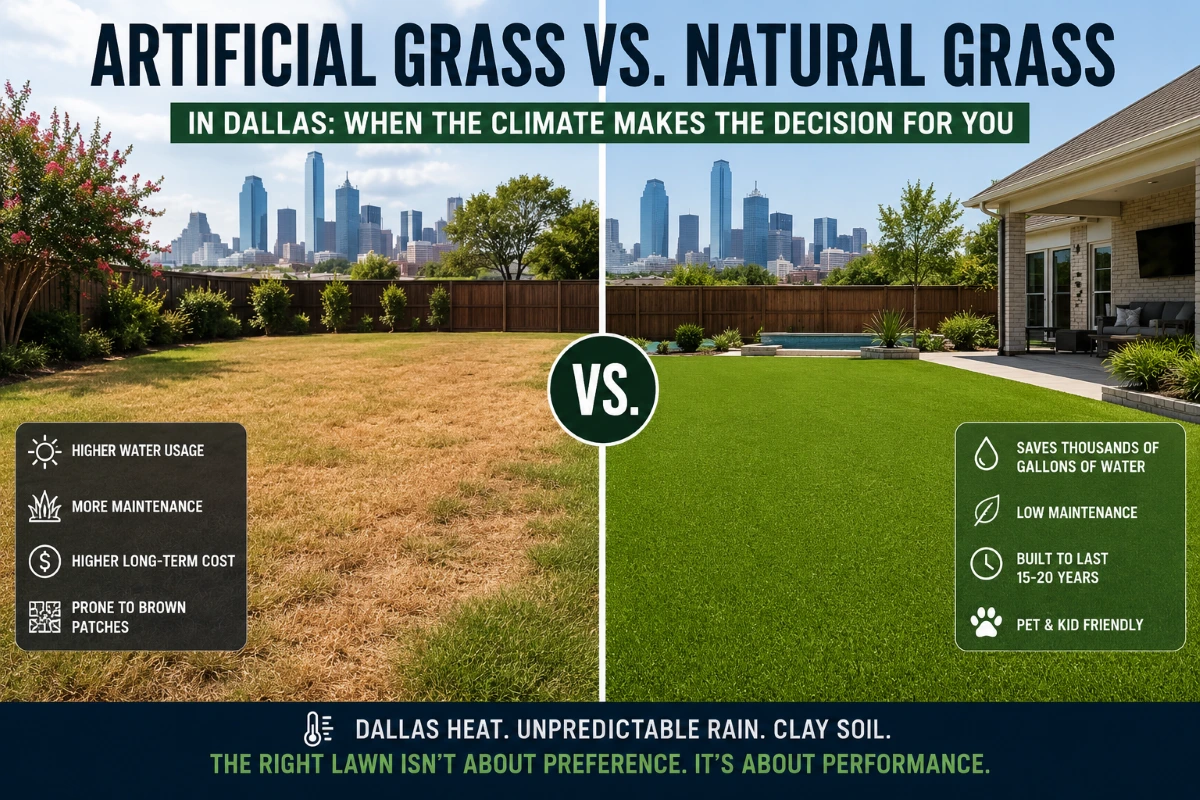
Why Dallas Is Uniquely Brutal on Natural Grass
The three culprits are not a secret, but most people do not connect them until they have already spent years fighting the consequences.The Soil Moves
North Texas clay expands when wet and contracts when dry, which sounds harmless until you realize the cycle never really stops. The result is uneven ground, chronic drainage problems, shifting surfaces, and brown patches that reappear no matter how many times you reseed them. Most homeowners assume they have a grass problem. Usually, they have a soil problem that the grass is simply making visible.The Heat Is Relentless
Full-sun areas in Dallas, especially near concrete, pools, patios, turf borders, or fencing, absorb and reflect heat in ways that push even healthy lawns past their limits. A south-facing backyard in Frisco with reflected heat bouncing off a pool deck behaves very differently than a shaded lawn in Lakewood under mature trees. That distinction matters. Because the response is always the same: more watering, more fertilizer, more effort, more frustration. And after all that work, the lawn still goes dormant for a significant part of the year. At that point, you are not growing grass anymore. You are simply trying to keep it technically alive.Grass Is Thirsty, and Water Is Not Cheap
A traditional lawn in Texas needs serious irrigation to survive peak summer. And when restrictions tighten or a sprinkler head fails at the wrong moment, months of work can unravel in a week. Most homeowners, when they add it up honestly, are spending a surprising amount of money every year simply maintaining a lawn that fights them the entire time. Not improving it. Maintaining it.Why Artificial Grass Has Changed, and Why That Matters
The reputation artificial grass carried for years was not entirely undeserved. Early turf looked plastic, felt wrong, trapped heat, and drained poorly. If you installed it in the late 1990s or early 2000s, you probably have a story. That product barely resembles today's premium synthetic grass systems. Modern high-quality artificial turf installation in Dallas is engineered specifically for the conditions North Texas creates: heavy rain, extreme heat, pets, UV exposure, heavy foot traffic, and the kind of drainage demands that come from sudden Texas downpours. The fibers evolved. The infill evolved. The drainage systems evolved. What has not changed is this: bad installations still fail exactly the same way they always did. The bigger shift, though, is not technological. It is psychological. Homeowners stopped asking "does this stuff look real enough?" and started asking "why am I spending this much time and money maintaining something I do not even enjoy anymore?" That is a much more useful question.The Honest Comparison
Most artificial-versus-natural comparisons focus on the obvious talking points: less mowing, stays green, saves water. All true. But the more meaningful comparison is operational.Natural Grass Requires Constant Labor
In Dallas, natural grass maintenance never really ends. Mowing, edging, fertilizing, weed control, aeration, sprinkler maintenance, seasonal patching. There is no finish line. The work simply continues indefinitely.Synthetic Grass Installation Simplifies Everything
A properly installed synthetic turf system removes most of that maintenance almost entirely. Not "reduces it a little." Removes it. What remains is occasional rinsing, debris removal, light grooming in high-traffic areas, and pet cleanup. That is why many homeowners describe turf less as a landscaping decision and more as buying back their weekends.Consistency Matters More Than People Think
Natural grass in Dallas changes constantly because weather, shade, pets, and foot traffic all take their toll. Artificial grass simply does not behave that way. It looks the same after a thunderstorm as it did before. No mud. No dead patches near the fence line. No patchy recovery project every spring. That consistency becomes especially valuable in HOA neighborhoods, luxury homes, pool environments, outdoor entertaining spaces, and homes preparing for resale.The Part Most Installers Skip: Drainage
This is where bad turf installations fail, and it is almost never the turf product itself causing the problem. A properly installed artificial grass system in Dallas requires real excavation, a layered compacted base, engineered drainage, decomposed granite, proper grading, and mechanical compaction in stages. Most quality synthetic turf installations in North Texas use roughly 3 to 4 inches of compacted base depending on traffic demands and drainage conditions. That foundation matters more than most homeowners realize. When drainage engineering is done correctly, artificial grass can actually drain faster than natural grass. Many premium systems are designed to handle more than 30 inches of water per hour. When shortcuts are taken, the opposite happens. Puddling, odor, surface movement, weak seams, and eventual failure. Dallas weather exposes shortcuts fast. A drainage issue that might take years to reveal itself in a milder climate often shows up after the first serious Texas thunderstorm here. This is why the installation system underneath the turf matters just as much as the turf product itself, and why asking an installer how they engineer drainage tells you more about their quality than any sample they can show you.How Long Does Artificial Turf Last in Texas?
A professionally installed, high-quality artificial grass system in Dallas typically lasts 15 to 20 years in standard residential applications, and 10 to 15 years in heavy-use areas like dog runs or high-traffic side yards. Shaded, lower-traffic areas can last even longer. The important phrase there is "professionally installed." Cheap synthetic grass in Texas fails early and predictably: it fades, mats down, separates at seams, loses blade memory, and becomes brittle under consecutive summers of UV exposure. Texas is extremely efficient at exposing inferior materials. What survives comfortably in a milder climate often falls apart here after only a few summers. That is why experienced local installers focus heavily on UV-stabilized fibers, heat-resistant infill, proper compaction, seam integrity, drainage engineering, and turf density. Those details are not marketing fluff. They are survival requirements in this climate.Where Artificial Turf Installation Makes the Most Sense
Not every yard needs to go wall-to-wall. The smartest turf projects tend to be strategic.Pet Areas and Dog Runs
Turf for dogs and pet areas are among the highest-return artificial turf applications in North Texas, mostly because dogs and Dallas summer heat are extraordinarily efficient at destroying natural grass. Premium pet turf systems with antimicrobial infill, fast-draining bases, and mud-free surfaces solve the problem permanently and usually mean considerably less mess tracked inside the house.Shade Problem Areas
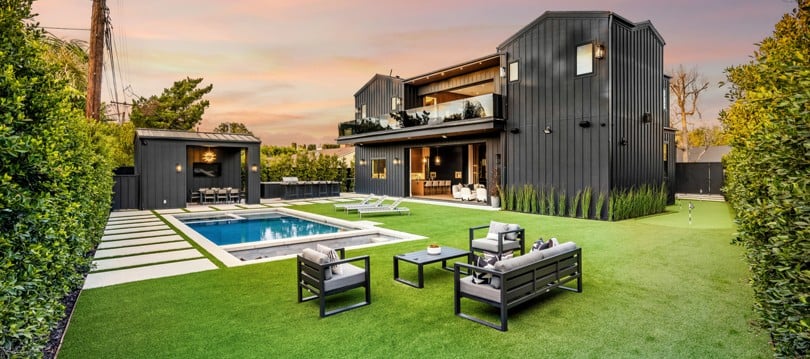
Side yards, fence lines, and tree-covered sections are places where natural grass often refuses to cooperate regardless of how much effort goes into it. Synthetic grass solves those zones without drama.Pool Surrounds
Natural grass around pools accumulates mud, dead spots, chlorine damage, and foot traffic wear. Artificial grass handles those conditions considerably better while improving drainage and keeping the area cleaner overall.Backyard Putting Greens
Putting green installation deserves separate mention because it is genuinely different from standard landscape turf work. Ball roll, contouring, drainage, and sub-base precision are specialized skills. A company that installs residential lawn turf is not automatically qualified to build a high-performance backyard putting green because those are completely different disciplines. In areas like Southlake, Prosper, Westlake, and the Park Cities, custom backyard putting greens are increasingly becoming a standard part of luxury outdoor living design.What Does Artificial Grass Installation Cost in Dallas?
This is the question most homeowners have and most websites avoid answering directly. So here it is. Artificial turf installation in Dallas typically ranges from $12 to $20 per square foot installed, depending on turf quality, base preparation requirements, site conditions, and project complexity. Putting greens and pet systems with specialized drainage run toward the higher end. That number sounds significant until you compare it against what natural grass actually costs over time: water bills, lawn services, fertilizer, sprinkler repairs, seasonal re-sodding, and the hours spent managing all of it. Most homeowners who do that math honestly find the gap is considerably smaller than they expected, and the artificial grass system actually pays for itself over several years. The more important number is not the upfront cost. It is the cost of a cheap installation that fails in three years. That is where homeowners get hurt.The Biggest Myth Worth Correcting
Artificial grass is not maintenance-free. It is low-maintenance, which is a meaningfully different thing. Homeowners who go in expecting zero effort forever tend to be disappointed, not because the product failed, but because the expectation was wrong. The accurate version is this: artificial turf dramatically simplifies outdoor maintenance and delivers year-round consistency. That part is absolutely true. "Never think about it again" is not.Does Artificial Grass Get Hot in Texas?
Yes, and any installer who tells you otherwise is being optimistic on your behalf. Artificial grass will get warmer than natural grass during peak Dallas summer heat. The honest question is not whether that is true. It is whether the system was engineered properly for Texas conditions in the first place. Modern premium systems reduce heat retention considerably through heat-reflective infill, advanced blade technology, lighter colorations, improved airflow design, and cooling infill systems. But in August in Dallas, most outdoor surfaces get hot. Concrete gets hot. Stone gets hot. Decking gets hot. The goal is not cold turf. The goal is intelligently engineered turf that performs well and remains usable in Texas heat. Lower-end systems that were never designed for Texas conditions are usually where the worst heat complaints originate. Product quality and installation quality are doing most of the work here.Frequently Asked Questions
Is artificial grass worth it in Texas?
For most homeowners in North Texas, yes. When you factor in the ongoing cost of water, lawn care, sprinkler maintenance, and seasonal repairs, a properly installed synthetic grass system typically pays for itself over time while eliminating most of the maintenance burden. The key word is "properly." A cheap installation in Texas is rarely worth it.How much does artificial turf installation cost in Dallas?
Most residential artificial turf installations in Dallas run between $12 and $20 per square foot installed. Variables include turf quality, base depth requirements, site prep, and project type. Pet systems and putting greens typically fall at the higher end of that range.Does artificial grass get too hot to use in a Texas summer?
Premium systems engineered for Texas heat are significantly cooler than older or budget turf products. Heat-reflective infill and advanced blade technology make a real difference. That said, like concrete, stone, and wood decking, artificial grass in direct August sun will be warm. The goal is a system that stays usable, not one that stays cold.How long does artificial grass last in Texas?
A professionally installed system using quality materials typically lasts 15 to 20 years in standard residential use. Heavy-use areas like dog runs tend to run 10 to 15 years. Texas UV exposure is the primary aging factor, which is why UV-stabilized fibers are not optional here.Can artificial grass handle Texas storms and flooding?
A properly engineered installation drains extremely well, often better than natural grass. Premium systems are designed to handle more than 30 inches of water per hour. Drainage problems in artificial grass are almost always an installation issue, not a product issue.What is the best artificial grass for dogs in Dallas?
Pet-specific turf systems with antimicrobial infill, perforated backing, and fast-draining compacted base systems perform best in North Texas. The combination of Texas heat and pet use is demanding, so both the turf product and the drainage engineering underneath it need to be specified for that application. You can learn more about this, and other key topics in our homeowner's guide to artificial grassThe Bottom Line
For many Dallas homeowners, artificial grass makes sense, especially when they honestly evaluate what natural grass is actually costing them every year in time, money, maintenance, frustration, and inconsistency. But only when it is installed correctly by people who understand the specific demands of North Texas. The future of landscaping across DFW is probably not a binary choice between natural and artificial grass. It is smarter use of outdoor space, with hybrid designs that combine synthetic turf with stone, native plants, and functional outdoor living areas built around how people actually use their yards. What is becoming increasingly obvious across Dallas is this: people are getting tired of spending significant time and money maintaining lawns that fight back. And once homeowners experience a properly installed artificial grass system, most of them do not spend much time looking back.
Get a Free Estimate for Your Project
Tell us a few details and our team will provide a fast, no-obligation quote tailored to your space.
✓ Professional grade turf and installation
✓ Local expertise, fast scheduling
✓ Transparent pricing — no surprises
Premium artificial turf installations from a local company you can trust for durability, performance, and long term value.
Services
Address
12080 Forestgate Drive
Dallas, TX 75043
Service Area Map
Hours of Operation
Monday - Friday 9am - 7pm
Saturday 9am - 4pm
Download
Homeowner's
Turf Guide
Premium artificial turf installations from a local company you can trust for durability, performance, and long term value.
Address
12080 Forestgate Drive
Dallas, TX 75043
Service Area Map
Hours of Operation
Monday - Friday 9am - 7pm
Saturday 9am - 4pm
Download Homeowner's
Turf Guide
Company
972-640-7101