
Playgrounds are the heart of any community, school, or park, providing children with a safe and enjoyable space to explore. However, traditional surfaces like wood chips or natural grass deteriorate quickly under heavy feet and harsh weather.
This leads many facility managers to ask: Is synthetic grass a viable long-term investment?
In short: Yes. High-quality playground turf systems generally last between 12 to 15 years, depending on usage and care. In this guide, Synthetic GreenScapes explores the factors influencing this longevity and provides expert tips to maximize the lifespan of your investment.
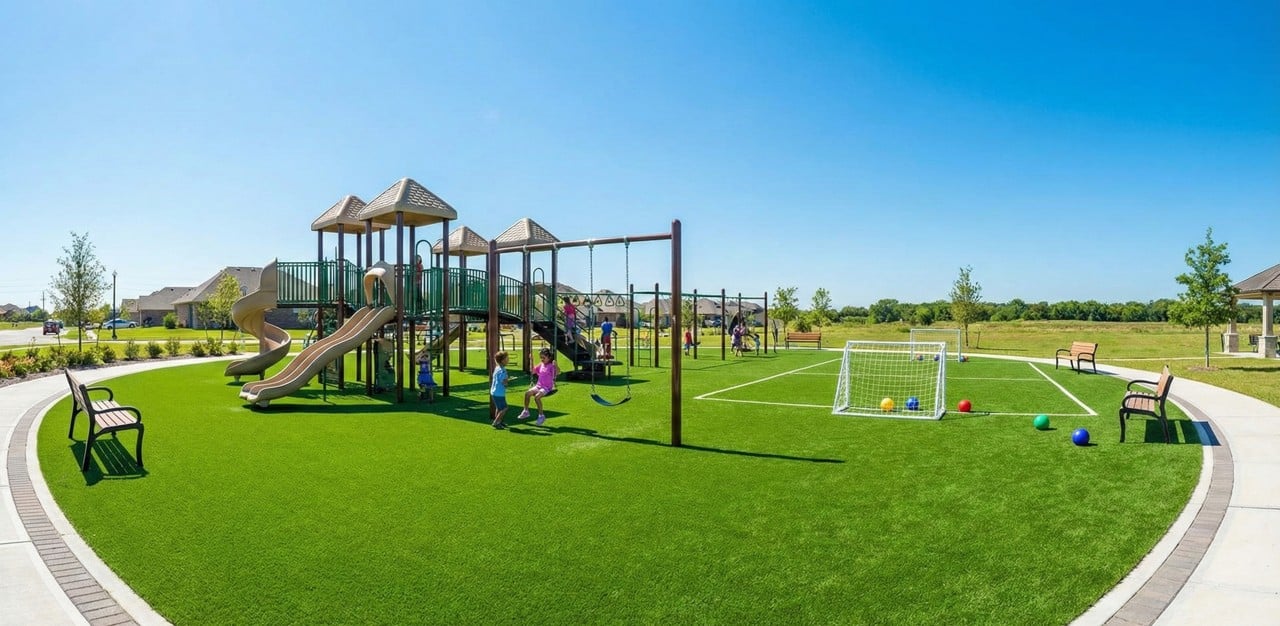
Factors That Impact Turf Longevity
Not all artificial grass is created equal. Before estimating how long your field will last, you must consider the specific stressors it faces.
1. Usage Intensity & Foot Traffic
The most significant factor is volume. A backyard playset sees very different traffic than a public school playground used by hundreds of children daily. While our commercial-grade fibers are designed to bounce back (resilience), constant concentrated friction—like under the base of a slide—will accelerate wear over time.
2. Climate & UV Exposure
In Texas, the sun is a formidable opponent. Cheaper imported turf can fade or become brittle within a few years of exposure to UV radiation. High-quality American-made turf features UV inhibitors built directly into the yarn resin, preventing the color from fading and ensuring the fibers remain soft and pliable despite the summer heat.
3. Maintenance Habits
While often sold as "zero maintenance," we prefer the term "low maintenance." Neglect is the enemy of longevity. Ignoring debris buildup or failing to replenish infill can lead to matting, which reduces the turf's ability to protect children from falls.
3 Tips to Extend the Life of Your Playground
Want to push your turf's lifespan past the 15-year mark? Follow these best practices.
1. Implement a Routine Maintenance Schedule
Consistency is key. For high-traffic public playgrounds, we recommend a quarterly professional grooming session. For private or residential areas, a monthly routine is sufficient:
- Remove Debris: clear leaves and trash to prevent drainage clogs.
- Brush the Fibers: Use a power broom to fluff the fibers upright. This prevents matting and keeps the surface looking fresh.
- Check Infill Levels: The infill layer protects the backing of the turf. If you notice fibers lying flat, you may need a top-up.
2. Reinforce High-Friction Zones
The area immediately at the bottom of a slide or under a swing set takes a beating. To prevent premature bald spots in these "friction zones," consider installing rubber mats or impact pads. These can be discreetly integrated into the design to take the brunt of the force.
3. Ensure Proper Drainage from Day One
Water is the silent destroyer of poorly installed turf. If water pools underneath the backing, it can degrade the sub-base and cause the turf to wrinkle or detach. Ensuring your installation includes a robust, permeable aggregate base is crucial for preventing water damage.
Invest in a Safe, Durable Future
Playground turf is designed to withstand heavy use while providing critical fall protection (impact attenuation) for children. By understanding the factors that affect its lifespan and implementing simple maintenance checks, you can enjoy a pristine play area for over a decade.
Synthetic GreenScapes is committed to engineering durable, IPEMA-certified recreational surfaces for schools, parks, and homes across Dallas.
Is your playground ready for an upgrade?
Get a Free Estimate for Your Project
Tell us a few details and our team will provide a fast, no-obligation quote tailored to your space.
✓ Professional grade turf and installation
✓ Local expertise, fast scheduling
✓ Transparent pricing — no surprises

Premium artificial turf installations from a local company you can trust for durability, performance, and long term value.
Services
Address
2709 Market Street
Garland, TX 75041
Map & Directions
Hours of Operation
Monday - Friday 9am - 7pm
Saturday 9am - 4pm
Download
Homeowner's
Turf Guide

Premium artificial turf installations from a local company you can trust for durability, performance, and long term value.
Address
2709 Market Street
Garland, TX 75041
Map & Directions
Hours of Operation
Monday - Friday 9am - 7pm
Saturday 9am - 4pm
Download Homeowner's
Turf Guide

Company
972-640-7101